FuturesHUB / Funding interval
Perpetual futures
Funding interval
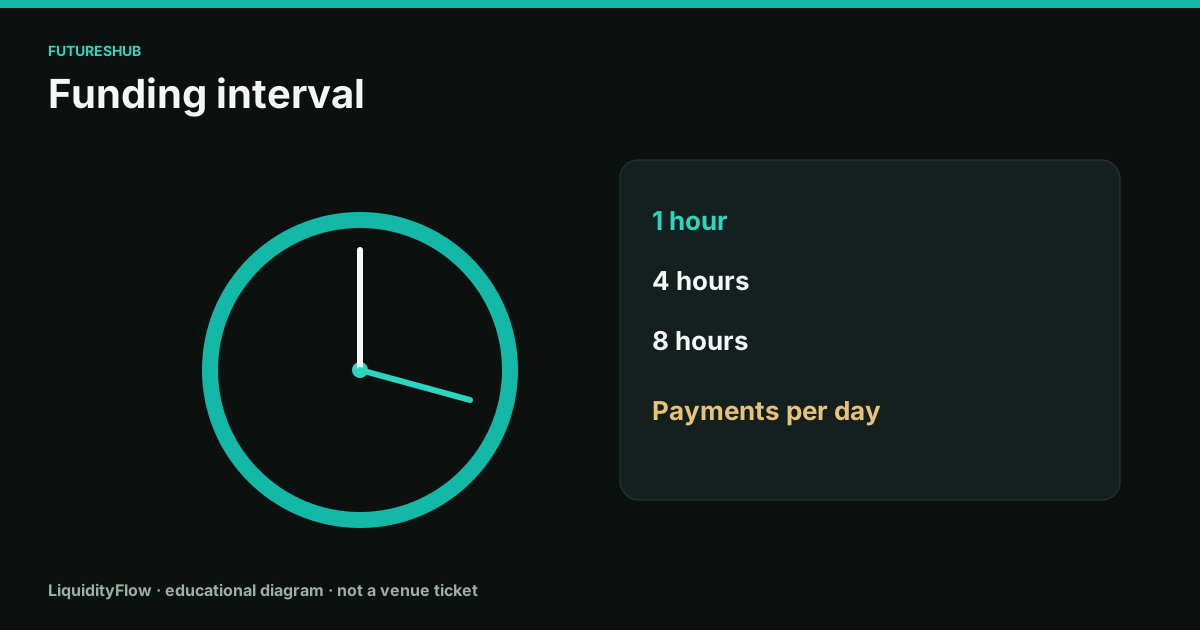
The interval is the schedule. A rate of 0.01% every eight hours and a rate of 0.01% every hour are different bills, even though the ticket prints the same percent.
Count the timestamps, not the days
An eight-hour interval means three payments a day if you hold the whole day: typically 00:00, 08:00, and 16:00 UTC, though you must read the venue clock. A one-hour interval means twenty-four payments. Comparing two contracts by the headline rate, without the interval, mis-ranks the cost.
The tools workbook asks for intervals per day because of this. Three is the right entry for a standard eight-hour contract. One is wrong for that contract and right for a daily settlement, which is rare on perpetuals.
The position has to be open at the instant
Funding is assessed on positions open at the timestamp. Traders who do not want the payment close before it and reopen after. That round trip pays the trading fee and the spread twice, which can exceed the funding they avoided. Do the subtraction before you make a habit of it.
Opening a few seconds before the timestamp usually puts you in the payment. The specification defines the snapshot. Assume you are included if you are open, and flat if you are flat. Do not rely on a race with the clock.
Intervals change
Venues change intervals on specific contracts when premiums stay wide, sometimes moving an eight-hour contract to one hour until the premium cools. The rate cap may change in the same announcement. A note you wrote last month about the schedule can be stale.
When you compare a predicted rate across two venues, write the interval beside each rate and convert both to a daily percent: rate times payments per day. Then the comparison is in the same unit.
On the ticket
- Read the next funding time and the interval on the contract page. Write both in the journal.
- Convert the rate to a daily figure by multiplying by the number of intervals in a day.
- If you plan to dodge the timestamp, estimate the fee and the spread of the close and the reopen. Keep the position open when that cost is larger than the funding.
- Re-read the interval after a venue announcement. A contract can change from eight hours to one hour.
Questions
Is funding charged every day at one time?
It is charged every interval. Eight-hour contracts settle three times a day. Hourly contracts settle twenty-four times. The contract page states which.
Do I pay funding if I am flat at the timestamp?
A flat position is outside the payment. The snapshot cares about the position that exists at that time.