FuturesHUB / The liquidation engine
Perpetual futures
The liquidation engine
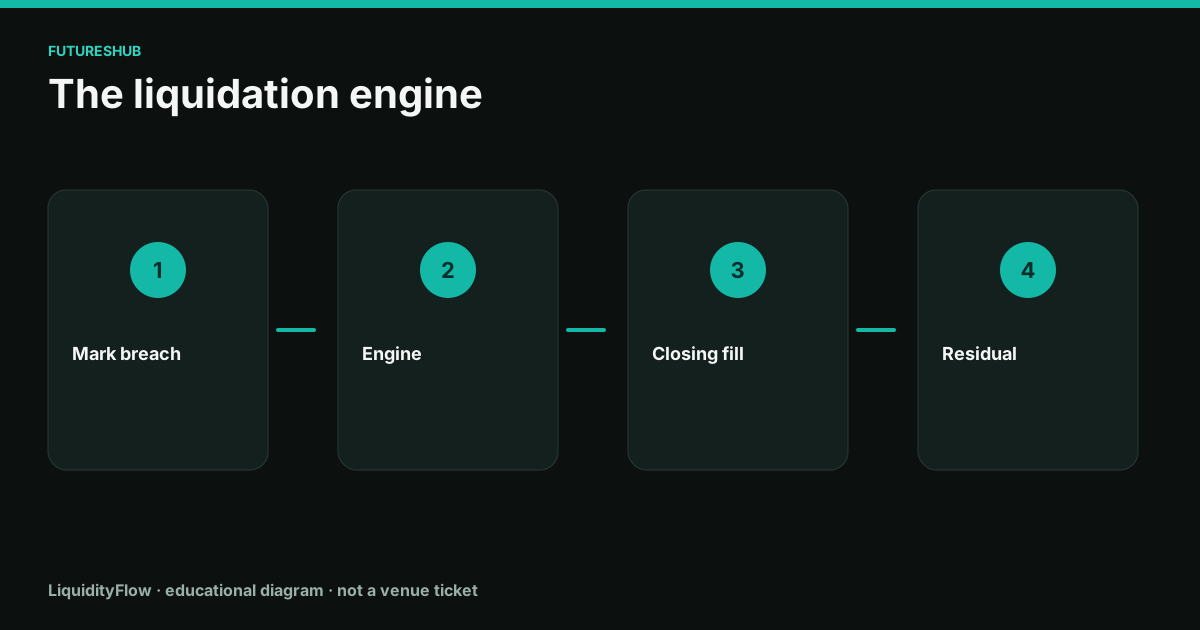
The liquidation engine is the closer of last resort. It does not negotiate the stop you meant to send. It closes the position once maintenance is breached and it charges for the work.
The sequence
The mark moves, equity falls through maintenance, and the engine takes the position. Some venues first try to cancel your open orders and use any isolated margin you could have added. Others go straight to a liquidation order. The contract specification lists the steps for that venue.
The closing order is often a marketable order, sometimes on a dedicated book, sometimes against the public book. It can fill worse than the liquidation price if the book is thin. That gap, plus a liquidation fee, is why traders describe liquidation as more expensive than a planned stop.
The fee and the residual
A liquidation fee is a percent of the notional being closed, taken by the venue or paid into the insurance fund, depending on the rule you are reading. It is not the same as the taker fee on a normal order, and it is not funding. The fill report names it.
If the close recovers more than the maintenance shortfall and the fee, the surplus handling is in the specification. If the close recovers less, the account can go to zero on that position and the insurance fund covers the rest so the winning side still gets paid.
Partial liquidation
Large tiers are sometimes reduced in slices. The engine closes enough size to drop the position into a tier it can support, then stops. A partial liquidation leaves you in a smaller position with a new entry and a new liquidation price. Read the fill before you assume the whole idea is gone.
A planned reduce-only stop, placed while the book is still orderly, keeps the exit in your hands. The engine is the path you use when that order was never working, or when the move was faster than the order.
On the ticket
- Read the liquidation procedure on the contract you trade: trigger price, order type, and fee.
- Place a reduce-only stop inside the liquidation price while you are calm. Confirm it is working, not merely drafted.
- If you are liquidated, read the fill price, the liquidation fee, and whether the close was partial.
- Write the mark at the trigger into the journal next to the candle. They are different prices.
Questions
Is liquidation the same as a stop loss?
A stop is your order, and it becomes a fill only if it triggers and the book takes it. Liquidation is the venue closing you because maintenance failed. The fee and the fill path are different.
Who receives the liquidation fee?
The specification assigns it, often to the insurance fund. Read that page before you assume it is a rebate or a normal taker fee.