FuturesHUB / Liquidation price
Perpetual futures
Liquidation price
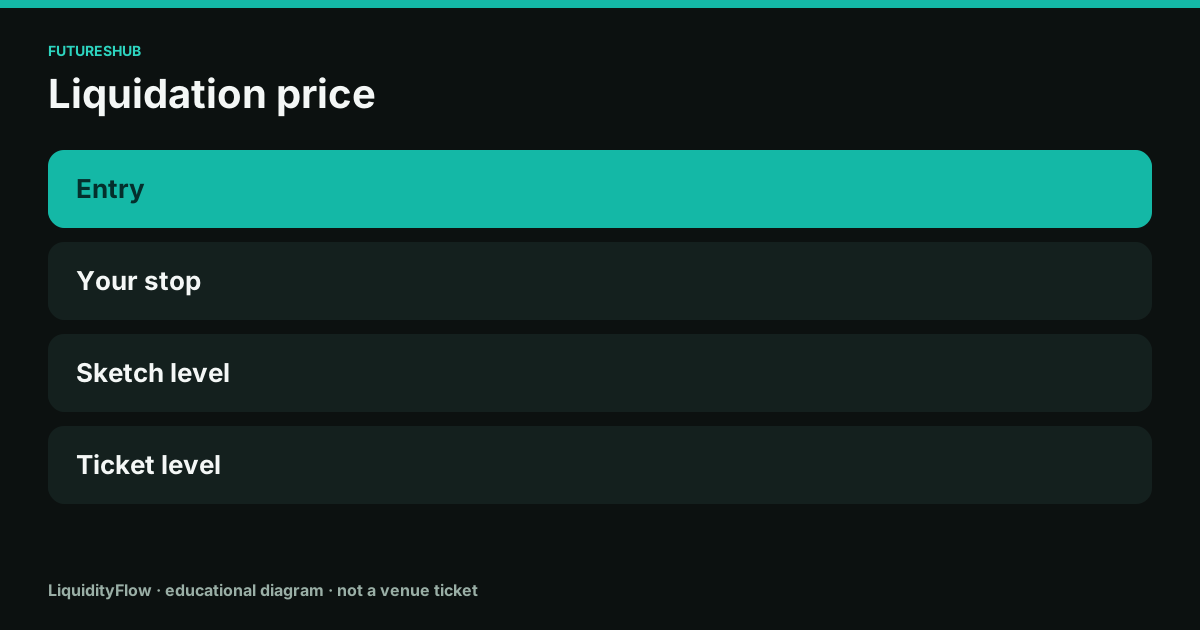
Liquidation price is a translation of your margin into a mark level. Cross that level and the engine is allowed to close the position. The formula on a marketing page and the formula on your ticket are often different.
The sketch this desk uses
For an isolated linear long, the tools page computes entry times (1 minus 1/leverage plus 0.005). For a short, entry times (1 plus 1/leverage minus 0.005). The 0.005 is maintenance assumed at 0.5%. Leverage is capped at 50 so the picture stays readable. Nothing is sent to an exchange.
The sketch ignores the open fee, the funding you will pay, and tier changes. All three move a real liquidation price. Use the sketch to see leverage pull the level toward the entry. Use the ticket for the level you will actually live with.
Mark, not the candle
The engine compares the mark with the liquidation condition. A candle wick through the level is a trade at the last price. If the mark stayed on the safe side, the position stays open. If the mark crosses while the last price has not, the engine can still start.
Quote the mark when you talk about a liquidation. A screenshot of a candle does not identify the price the venue used.
The stop has to be inside the fence
A stop beyond the liquidation price is decorative. The engine closes the position at the liquidation path, which includes a liquidation fee and possible slippage, before your stop becomes an order. Move leverage down or move size down until the ticket's liquidation price sits beyond the stop you actually want.
Isolated and cross print different liquidation prices for the same entry and size. Switching modes without re-reading the price is how a stop that used to be inside the fence ends up outside it.
On the ticket
- Type the entry, side, and leverage into the tools sketch. Read the distance in percent.
- Open the same position preview on the venue and read its liquidation price. Write both numbers down and label them sketch and ticket.
- Place the stop closer to entry than the ticket's liquidation price. If you cannot, the position is larger or more levered than the stop implies.
- Re-read the ticket level after any added margin, funding payment, or mode switch.
Questions
Why does the venue's liquidation price differ from the tools page?
The tools page assumes isolated margin and 0.5% maintenance, and it ignores fees. The venue uses its tier, its mark, and its buffers. The ticket is the level that will be enforced.
Can the price gap past the liquidation price?
Yes. The engine then closes at the prices it can get, and the residual beyond the margin is an insurance-fund event. The printed liquidation price is the trigger, not a guaranteed fill.