FuturesHUB / Open interest
Perpetual futures
Open interest
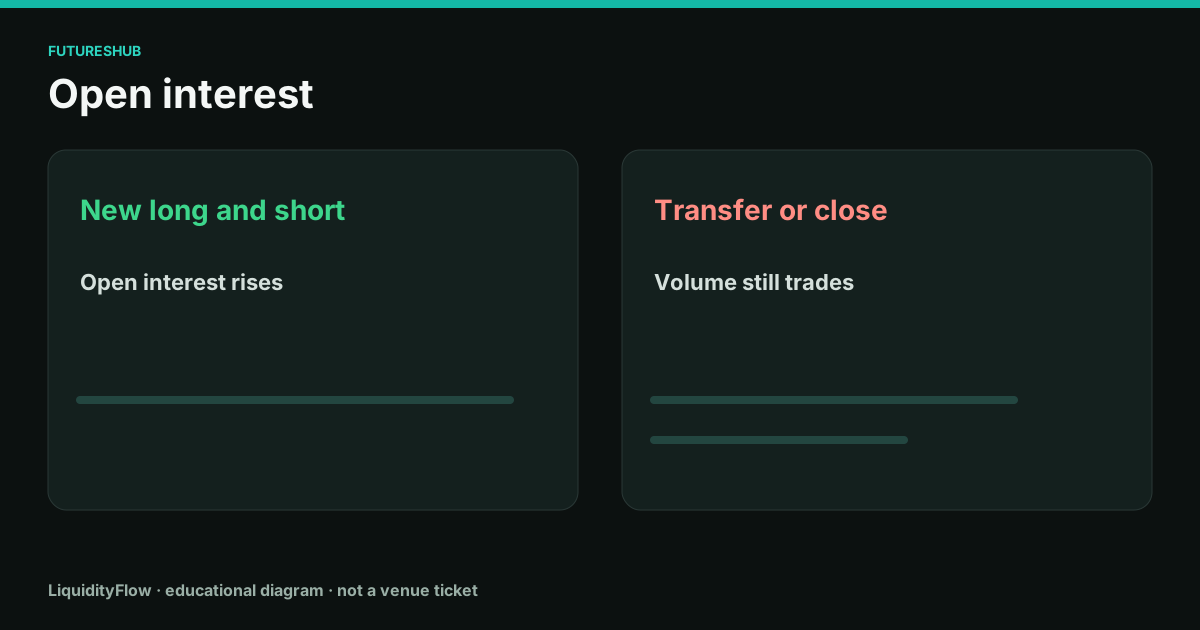
Open interest counts how many contracts are currently open. Volume counts how many contracts changed hands. They move together only in specific cases, and the cases are worth knowing.
One contract, two sides
Every open contract has a long and a short. Open interest counts the contract once, not twice. If a new long opens against a new short, open interest rises by that size and volume rises by that size. The market has a larger stock of exposure.
If an existing long closes against an existing short, both sides are done. Open interest falls, and volume still rises because a trade occurred. If an existing long sells to a new long, the short in the middle is untouched. Open interest stays flat while volume rises. The exposure was handed from one account to another.
What people misread
A high-volume day with flat open interest is churn. Traders replaced each other. A rising-price day with rising open interest means new exposure entered, without telling you whether the new exposure was mostly the aggressive long or the passive short. You need the tape, or a specific positioning feed, for that split.
Falling open interest during a rally means shorts are covering or longs are closing into the bid more than new exposure is arriving. It is a description of the stock of contracts. It is not, by itself, a signal to copy.
Where it sits next to funding
Funding is paid on the open stock, not on the day's volume. A crowded open interest and a wide premium produce a funding bill on everyone who holds, including people who did not trade that day. Volume tells you how busy the door was. Open interest tells you how many people are still in the room when the timestamp arrives.
Coin pages and the market table on this site show spot-style volume from the price feed. That number is not the perpetual's open interest. Read open interest on the venue that lists the contract.
On the ticket
- Write open interest and 24-hour volume as two fields. Do not add them.
- When both rise, note that new exposure was created. When volume rises and open interest does not, note that exposure was transferred or closed.
- Check open interest before you interpret a funding rate. The rate is the price of holding that stock.
- Pull the figure from the venue. Do not substitute Coinlore volume.
Questions
Is open interest the same as volume?
Volume is contracts traded over a window. Open interest is contracts still open. A trade can raise volume while open interest rises, falls, or stays the same.
Does open interest double-count longs and shorts?
No. One contract is one unit of open interest, shared by one long and one short.