FuturesHUB / Basis and premium
Perpetual futures
Basis and premium
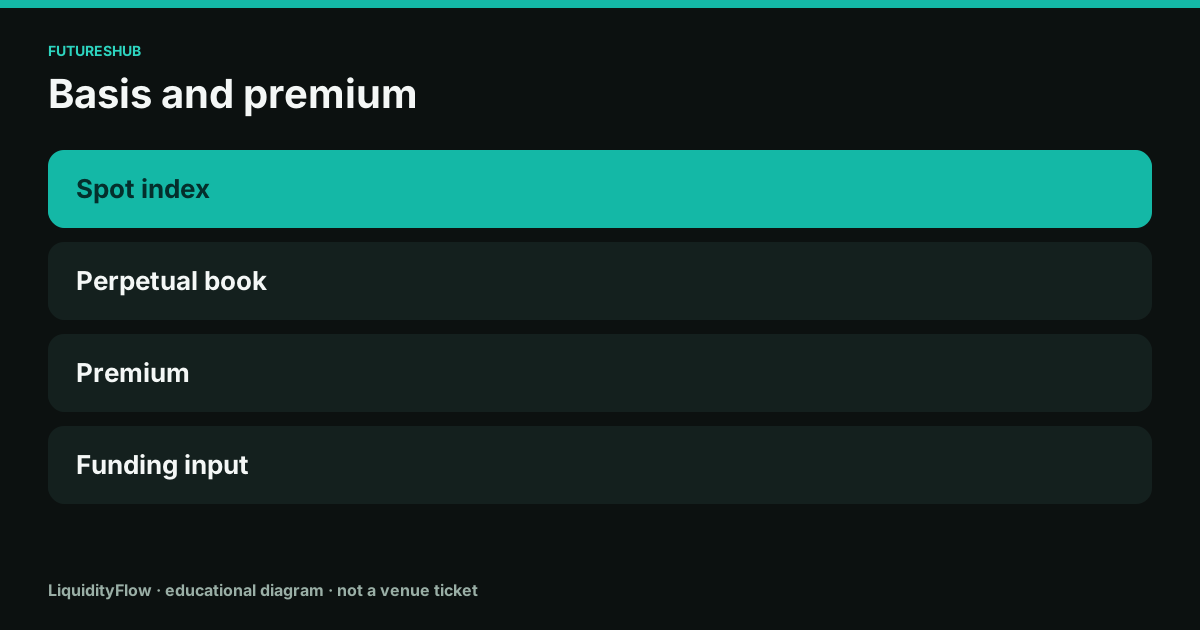
Basis is how far the contract sits from spot. On a perpetual, that gap is usually called the premium, and a smoothed version of it becomes the funding rate.
A gap with a sign
Premium is positive when the perpetual book is above the index and negative when it is below. Traders pay up for long exposure when they are eager, and they sell the perpetual below spot when they want short exposure badly enough. The gap is a positioning clue and a cost clue at the same time.
A dated future's basis also includes time to expiry. A perpetual has no expiry, so the gap is mostly urgency plus the funding that has not yet been paid. You should not import a commodities basis formula and apply it unchanged.
Impact prices, not the last tick
The premium index usually compares impact bid and impact ask with the index. An impact price is the average price to fill a stated size. Using it stops a one-lot print from setting the funding rate for the whole market.
The specification defines that size. A premium that looks large on a candle may be small once the impact size is applied, or the reverse on a thin book where a modest order moves the impact price a long way. Read the impact notionals before you compare premiums across contracts.
From premium to a payment
Venues average the premium over the funding window, add a small interest differential on some specifications, and clamp the result between a floor and a cap. The clamp is why a wild premium does not become an unlimited funding rate. The cap is in the specification, and it changes.
The predicted funding rate on the ticket is an estimate for the next timestamp. It updates as the window fills in. The rate that actually prints at the timestamp is the one your position pays. Journal the realized rate, not the prediction you saw in the morning.
On the ticket
- Subtract the index from the perpetual mid and divide by the index. That rough premium is a reading, not the official index.
- Open the funding panel and compare your rough reading with the venue's premium and predicted rate.
- Note the clamp. If the predicted rate is stuck at the cap, the book is tighter than the payment suggests, or looser, depending on the sign.
- If you plan to hold through the timestamp, include that predicted payment in the cost stack before you add size.
Questions
Is a positive premium good or bad?
It means the perpetual is rich to the index. Longs usually pay the funding that results. Whether that is attractive depends on how long you hold and what the position is for.
Does LiquidityFlow publish a live premium?
No. This page explains the mechanism. The premium on your ticket is the one the venue calculates from its own index and impact prices.