FuturesHUB / Last price
Perpetual futures
Last price
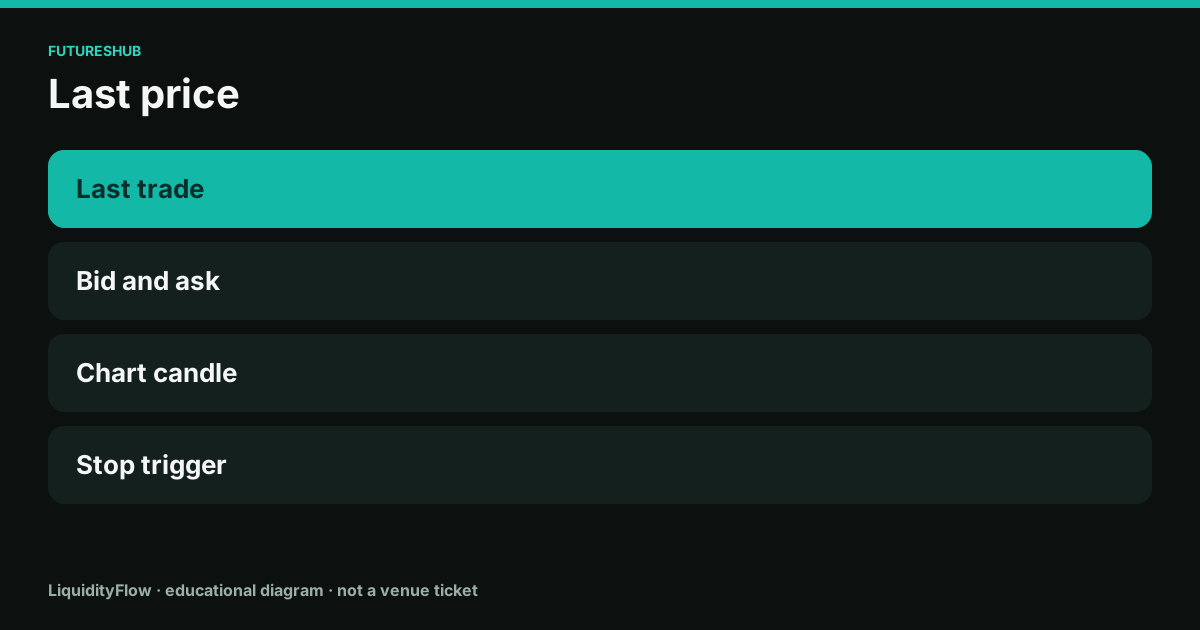
Last price is the most recent fill on that contract. It is real, it moves the candle, and it is the wrong default assumption for margin math until the specification says otherwise.
A print is a trade
The last price updates when a buyer and a seller match. A large market order can print through several levels and set a last price far from the mid. The next quiet second can print back. Both prints are real trades. Neither one, by itself, is the index.
Chart candles, volume, and many default stop settings follow this print. If you are reading a TradingView candle of BINANCE:BTCUSDT.P, you are looking at trades on that perpetual, not at the mark and not at Coinlore's aggregated coin price.
Where last price is the right input
Use the last price, together with the bid and ask, to estimate a fill. A market buy starts at the ask and walks up. The last price tells you where the market just was. The book tells you where the next order will go.
Some contracts let a stop trigger on last, on mark, or on index. Last is the jumpy choice. It fires when a trade prints through the level, including a trade that immediately reverts. Mark is the slower choice. Pick the one that matches the event you mean.
Three prices, three jobs
Keep a three-row habit. Index: where spot is. Mark: where margin is measured. Last: where the perpetual just traded. Funding looks at the gap between the perpetual book and the index. Liquidation looks at the mark. Your next fill looks at the book around the last trade.
Coin pages on this site show a Coinlore price and a DefiLlama path, plus a TradingView chart when the symbol is a normal Binance pair. Those sources will disagree. The disagreement is the point of reading more than one price.
On the ticket
- Read bid, ask, and last before a market order. The distance from mid to the far side of your size is the slippage you are about to pay.
- Open the stop dialog and read the trigger source. Change it if it says last and you meant mark.
- When you compare a coin page with a venue, name the source in the note. Coinlore, mark, and last are three numbers.
- If last and mark diverge beyond the spread, look for a thin print or a stale mark before you treat the gap as a signal.
Questions
Is the chart the mark price?
A standard trade chart plots last price. The mark is usually a separate line or a separate field on the ticket. Check the chart's symbol and price source.
Should stops use last or mark?
Use last when you want the stop to follow trades. Use mark when you want it to follow the liquidation reference and ignore a single wick. The ticket lists the choices.