FuturesHUB / Mark price
Perpetual futures
Mark price
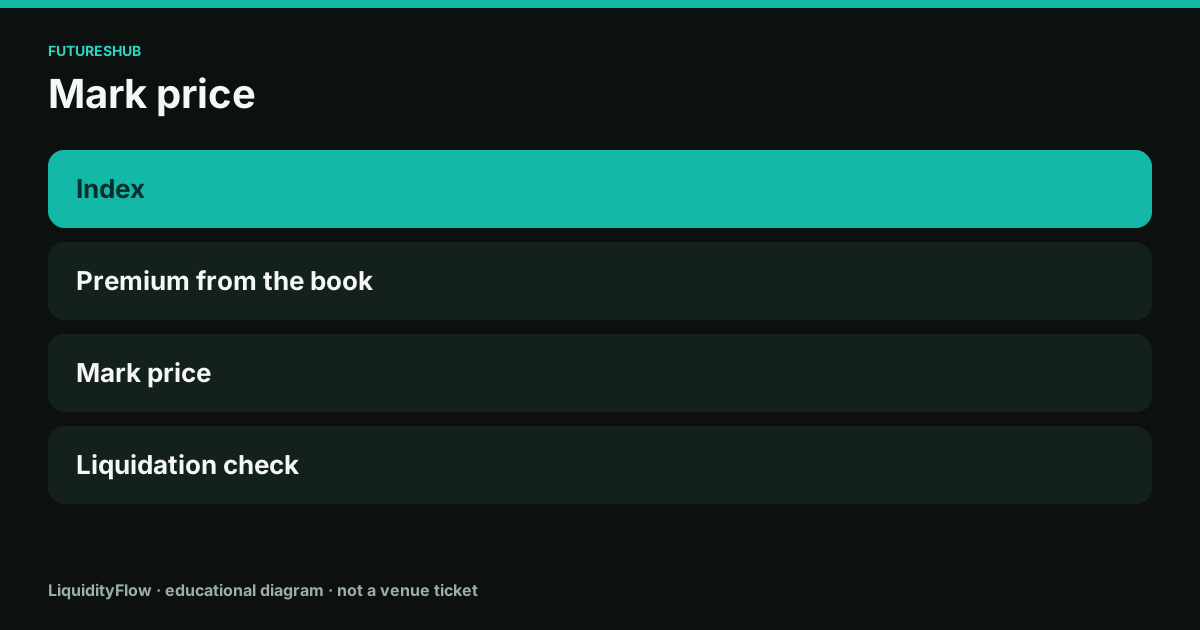
The mark price is the number that usually decides whether your margin is still enough. It is designed to follow the index, with a controlled premium, rather than the latest aggressive print on the perpetual.
How a mark is built
A common construction takes the index and adds a premium. The premium looks at the perpetual's impact bid and impact ask, which are prices that would fill a defined size, and measures how far those prices sit from the index. A one-contract wick does not set the premium. The specification publishes the exact impact size and the moving average.
Some marks also include a short moving average of the premium so a one-second dislocation fades. The result is a price that moves with spot and with a sustained premium, and that ignores a fleeting print.
What the mark controls
Unrealized profit on the ticket is usually marked to this price. Maintenance checks compare your equity, after that unrealized result, with the maintenance requirement. Liquidation starts when the mark, not the last trade, crosses the liquidation condition on most of the large books.
That is why a chart candle can spike through a level you were watching and the position can still be open. The candle recorded a trade. The mark did not follow it. The opposite happens too: the mark can reach liquidation while the last trade on a thin book has not printed there yet.
Mark is the wrong price for a fill estimate
You cannot send an order and demand the mark. A market order fills against the book. A limit order fills at your limit or better. The mark is an accounting price. If the book is wide, the fill and the mark diverge by the spread plus your impact.
When you sketch a liquidation price, say which price you used. The tools workbook uses an entry you type and a 0.5% maintenance assumption. A venue sketch that uses the mark will sit in a different place, especially when the perpetual is trading at a wide premium to the index.
On the ticket
- Find the mark on the ticket and put it next to the last price. Write down the gap in percent.
- Confirm in the specification that liquidation references the mark. If a contract uses a different price, follow the contract.
- Set stop triggers on the source you intend. A last-price stop and a mark-price stop fire on different events.
- When you journal a liquidation, record the mark at the time, not only the candle wick.
Questions
Why was I not liquidated when the candle wicked through my liquidation price?
The candle is trades. Liquidation on most perpetual books follows the mark. A wick that the mark never reached does not start the engine.
Can I get filled at the mark?
Only if the order book happens to trade there. The mark is an accounting price built from the index and a premium. Your order fills on the book.