
Box trading on Bitunix futures
fade the edges, skip the middle, and only switch to breakout mode after two checks
Key takeaway
Markets spend a lot of their time going sideways, and Bitunix Academy's box strategy guide is built around that. You draw the range, trade its edges, and only flip to trend-following once a breakout proves itself.
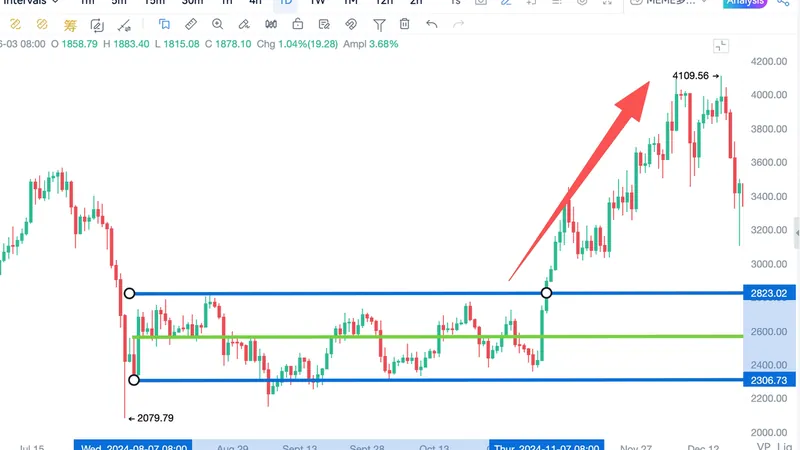
The image is the ETH/USDT daily chart from the guide itself: blue lines mark the box, the green line is the midline, and the red arrow shows the breakout run.
The four parts of a box
- Upper boundary: swing highs where sellers keep showing up
- Lower boundary: swing lows where buyers keep defending
- Midline: halfway between, where neither side has an edge
- Breakout zone: a decisive close beyond either edge
The guide suggests the daily chart to define the box and the 15-minute chart for timing.
Two playbooks
Inside the box, look for longs near support when you get a reversal candle like a Hammer or Doji and selling volume fades, and shorts near resistance on a Shooting Star, Bearish Engulfing or long upper wick.
Outside the box, wait for three things before switching to trend mode: a strong close beyond the edge, the next 15-minute candle confirming it, and volume backing it up. If the break fails, go straight back to the range playbook.
The midline is the part people skip. Bitunix calls it a no-trade zone because the risk to reward from the middle is poor and direction is unclear.
Targets and exits
Measure the box height and project it from the breakout for target one, taking half off there. A second box height gives target two. For longer holds, the guide uses the daily EMA30 as a trend filter and exits on a decisive close through it.
The two worked examples
ETH/USDT ranged between about 2,300 and 2,800 on the daily with a 2,600 midline. The guide scales into longs at 2,360 to 2,500, confirms the breakout above 2,800, and notes the move later reached 4,109.56. The stop rule: two straight 15-minute closes below 2,300.
RIVER/USDT broke below a 15-minute box at 6.325 (top at 6.819). The short only became valid after two 15-minute candles failed to close back above 6.325, with entries on the retest near 6.3 and an invalidation of two closes above 6.4.
Pitfalls the guide flags
- A lower-timeframe break inside a higher-timeframe range is often false
- Narrow, choppy boxes aren't worth trading
- Breakouts without volume trap people
- Range trading means more round trips, so maker and taker fees add up
The rule worth stealing: a breakout that fails isn't a loss of plan, it just puts you back in range mode.
Open an account
BitunixBitunix fees, review and signup details
Open BitunixLiquidityFlow may earn a commission if you register through that link. Affiliate disclosure