FuturesHUB / Linear and inverse contracts
Perpetual futures
Linear and inverse contracts
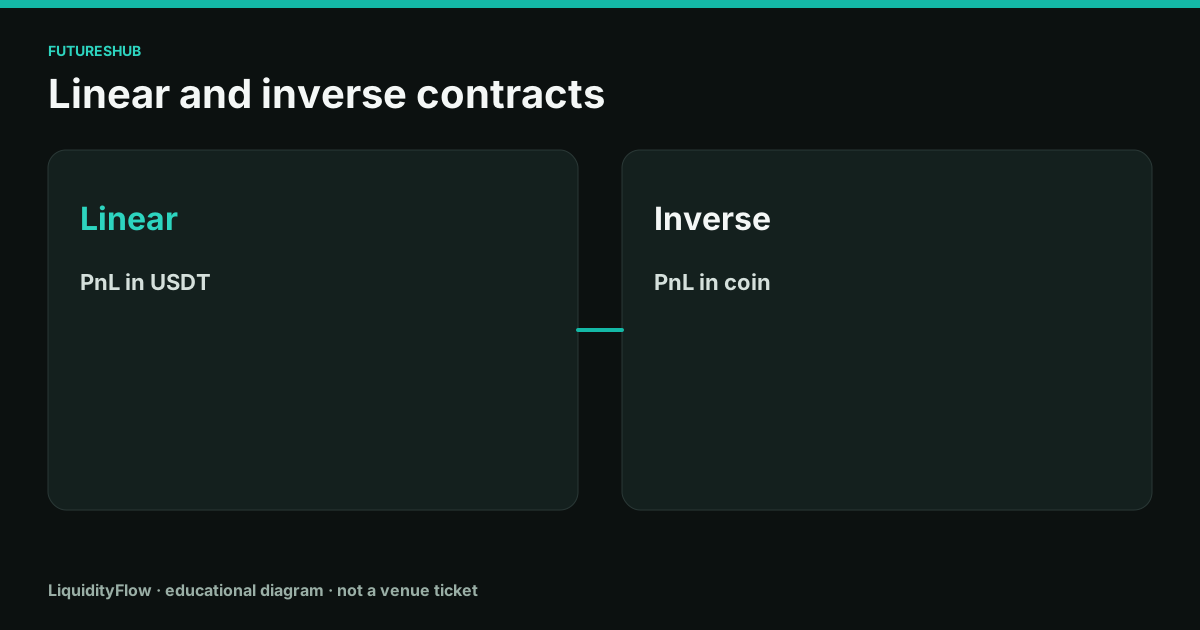
Linear and inverse contracts can share a chart and still produce a different balance after the same price move. The difference is the asset you post as margin and the asset you receive as profit.
Linear means quote-settled
A linear, or USDT-margined, perpetual uses a stablecoin as margin and pays profit and loss in that stablecoin. If you are long one bitcoin of notional and the mark rises by $500, the position gains about $500, before fees and funding. The coin balance in your wallet does not have to change.
Linear contracts are easier to compare with a dollar risk limit. A trader who wants to lose at most $200 on a stop can size the position in dollars and keep the result in dollars. That is the contract family the tools workbook sketches.
Inverse means coin-settled
An inverse, or coin-margined, perpetual uses the coin as margin and settles profit in the coin. Contract specifications usually quote a fixed coin value per contract, often $1, $10, or $100 of the coin. Profit for a long is commonly contract value times quantity times the difference of one over entry and one over exit. The specification states the multiplier.
Because margin is the coin, a rally increases both the contract profit and the dollar value of the collateral. A decline does the opposite. The account can look stable in coin terms while the dollar value of that margin is moving. Inverse shorts are the matching case: profit arrives in coin while the coin's dollar price is falling.
How to tell which ticket you opened
The contract name usually carries the quote. BTCUSDT is linear. BTCUSD on a coin-margined book is often inverse. The margin asset on the ticket is the confirmation. If the margin balance is labeled USDT, you are on a linear contract. If it is labeled BTC, you are on an inverse contract.
Fees, funding, and liquidation are denominated in the margin asset. A funding rate of 0.01% on a linear contract is a USDT cashflow on the notional. The same printed rate on an inverse contract is a coin cashflow. Do not add those two numbers together as if they were the same unit.
On the ticket
- Read the margin asset on the ticket before you size the trade. Write USDT or the coin at the top of the note.
- For a linear contract, profit is approximately quantity times the price change, in the quote asset.
- For an inverse contract, open the specification and copy the contract value. Profit is in coin, using the inverse price difference the specification prints.
- Keep linear and inverse positions in separate risk notes. A shared dollar stop does not describe both.
Questions
Which contract does the LiquidityFlow sketch use?
The practice desk and the tools workbook sketch a linear, isolated position with profit in dollars. They do not reproduce an inverse coin-margined engine.
Can I hedge a spot coin with either contract?
A short linear perpetual offsets the dollar move of a coin you hold. A short inverse perpetual offsets it in coin terms and changes the coin balance as it settles. Pick the unit you actually want to stabilize.