FuturesHUB / Notional and PnL
Perpetual futures
Notional and PnL
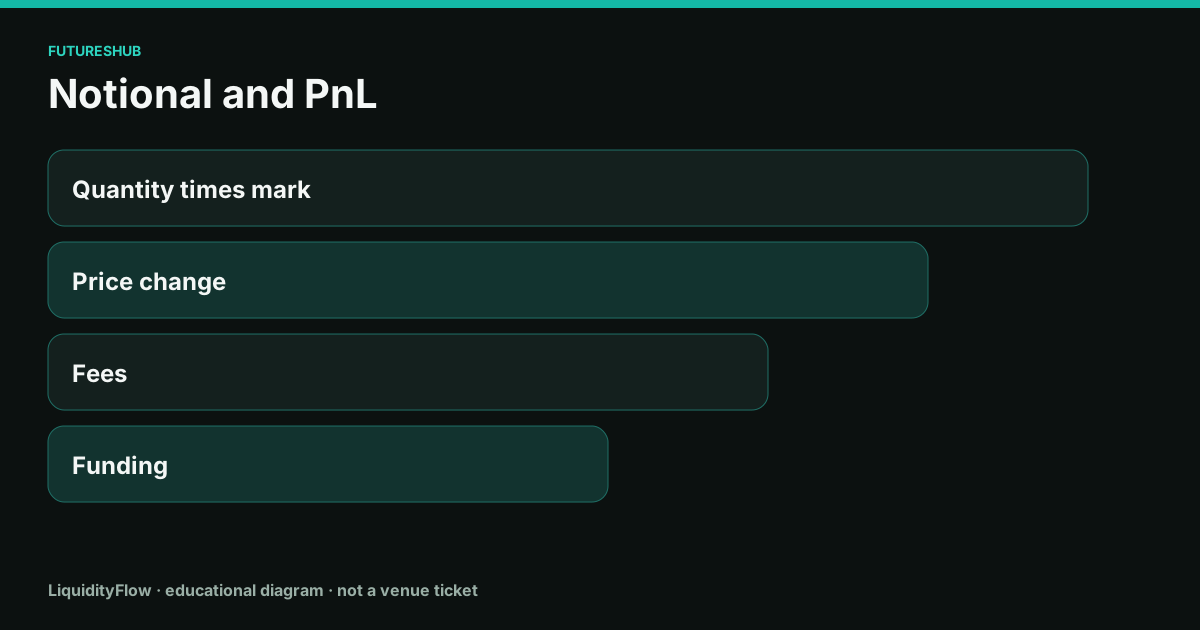
Notional is how much price exposure the position carries. Profit and loss is what that exposure earned between two prices, in the margin asset, after you account for the contract multiplier.
Notional is size, not margin
On a linear contract, notional is approximately quantity times mark, in the quote asset. A position of 0.2 BTC at a $100,000 mark is about $20,000 of notional. If the leverage is 10, the initial margin is about $2,000. The market move still acts on the $20,000.
People mix the two numbers up and then misread a fee. The taker fee is charged on notional, not on the margin you posted. A 0.05% taker fee on $20,000 is $10. The same fee on the $2,000 margin would be the wrong calculation.
A linear price result
For a linear long, the price result is quantity times (exit minus entry). For a linear short, swap the two prices. Use the contract's quantity unit. Some books quote size in coins, some in contracts that each represent a fraction of a coin. The specification tells you the multiplier.
Unrealized result on the ticket usually marks the position to the mark price, not to the last trade. Realized result appears when you close, and the fill price of that closing trade is the exit. A limit close and a market close can realize different numbers on the same click.
Where the other costs sit
Subtract the open fee and the close fee from the price result. Then add or subtract funding paid while the position was open. A round trip that made $40 of price profit and paid $12 of taker fees and $15 of funding made $13.
Inverse profit is denominated in coin and uses the inverse of price. Keep that result in coin until you choose to convert it. Multiplying an inverse coin profit by the entry price, the exit price, or the mark will give three different dollar figures.
On the ticket
- Write quantity, entry, and mark. Multiply quantity by mark and label the product notional.
- Compute a 1% price result as 0.01 times notional for a linear contract. That is the risk unit to compare with your stop.
- Look up the taker rate on the dated fee desk and multiply by notional for the open, then again for the close.
- Leave a line under the price result for funding. Fill it from the venue's rate when you hold across a timestamp.
Questions
Is notional the same as margin?
No. Notional is the exposure. Margin is the collateral posted against it. Leverage is notional divided by the margin assigned to the position.
Why does the ticket's profit differ from last price times quantity?
The unrealized number usually uses the mark. The last trade can sit away from the mark. Fees and funding are also already inside many ticket totals.