FuturesHUB / Long and short
Perpetual futures
Long and short
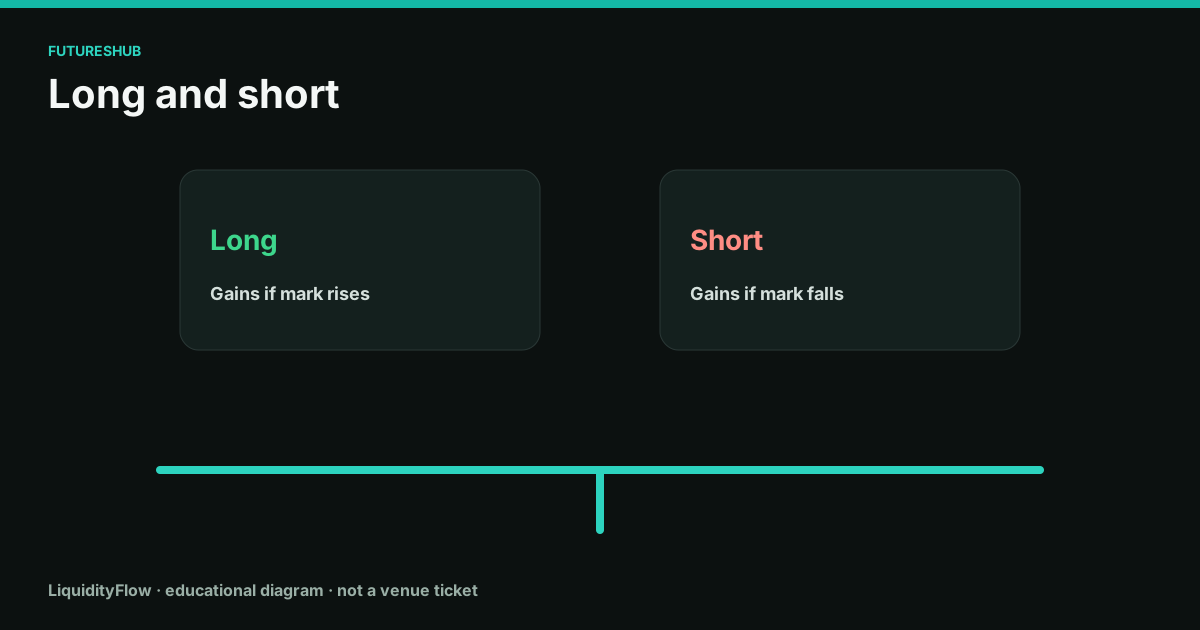
Long and short are directions on the same contract. The long wants the mark higher than the entry. The short wants it lower. Neither position requires you to own the coin in a spot wallet, and both can run out of margin.
The payoff before costs
On a linear contract, a long's price result is quantity times (exit minus entry). A short's price result is quantity times (entry minus exit). That is the whole directional bet. Funding, fees, and the gap between the price you expected and the price you were filled at sit on top of it.
A short is a contract position. On a linear book it is not the same action as borrowing a coin on a spot margin desk and selling it. The collateral, the liquidation rule, and the funding cashflow follow the perpetual specification.
Both sides post margin
The short does not receive the notional as spendable cash. The short posts initial margin, the same way the long does. If the mark rises, the short's equity falls. If equity falls through maintenance, the short is the position that gets liquidated.
Open interest counts the outstanding contracts, with one contract shared by a long and a short. Opening a new long against a new short increases open interest. The two sides are the same market, not two separate piles of coins.
One-way mode can flip you
In one-way mode the venue keeps a single net position. A sell larger than your long closes the long and opens a short with the remainder. That flip is easy to miss on a market order. Reduce-only blocks the flip: the order can shrink the position and will not open the other side.
Hedge mode, where the venue allows it, keeps a long and a short open at the same time. Funding and fees apply to each side. A matched long and short can offset price risk and still cost money to open and to hold.
On the ticket
- Write the side, the quantity, and the entry before you send the order. Then write the price result of a 1% move in the quote asset.
- Check whether the ticket is one-way or hedge. In one-way mode, decide whether the order is allowed to flip the position.
- Use reduce-only when the only acceptable result is a smaller position.
- Add the funding sign. A long that is right on price can still pay funding if the rate stays positive.
Questions
Does a short perpetual borrow the coin?
On a linear perpetual, the short is a margined contract. The venue's specification, not a spot borrow, sets the collateral and the liquidation. A spot margin short is a different product.
Can both a long and a short be liquidated in the same market?
Yes. Whichever side loses enough equity relative to maintenance is the side the engine closes. They are not liquidated together unless both positions, on different accounts, have run out of margin.