
Cross vs Isolated margin on Bitbase
one shared pool vs one ring-fenced position, what triggers liquidation in each, and the auto-margin catch
Key takeaway
The margin-mode selector is the first box in the Bitbase order panel, and it's the one most new traders click past. It decides how much of your account a single bad trade can reach.
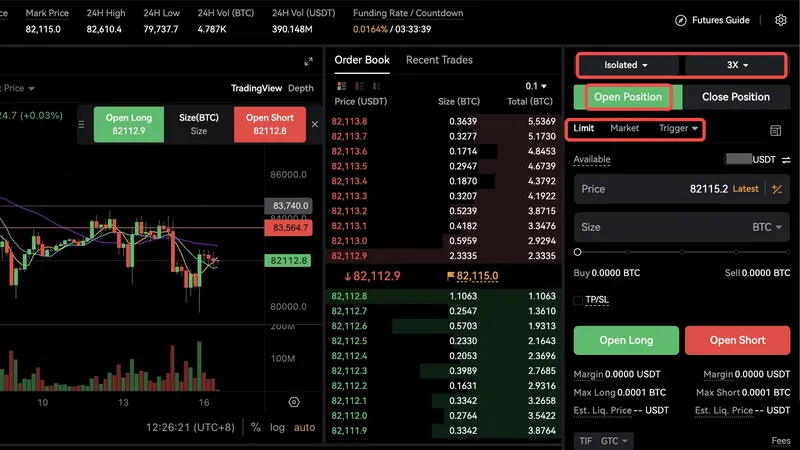
The image is from Bitbase's help-center guide: the BTCUSDT perpetual order panel with the mode set to Isolated at 3X, next to the Limit, Market and Trigger order types.
Cross margin: one shared pool
- Every Cross position draws on the same futures account balance
- A loss on one position eats into the margin backing all the others. New positions, transfers and risk-tier changes shift the whole account's risk
- Liquidation fires when Cross equity (excluding Isolated margin and Isolated PnL) drops below the total maintenance margin of all Cross positions
- In Bitbase's words, in a liquidation you can lose all the allocated margin and every position sharing it
- The estimated liquidation price keeps moving as other positions move, so don't treat it as a fixed line
Isolated margin: one ring-fenced position
- You assign a set amount of margin to one position
- It's checked on its own: liquidation fires when that position's margin + unrealized PnL ≤ its maintenance margin
- A blow-up there generally doesn't touch the margin on your other Isolated positions
- Adding or removing margin only changes that one position's risk
The auto-margin catch
Isolated has an Auto-Margin Replenishment option. With it on, Bitbase tops the position up from your available futures balance before liquidating. That doesn't guarantee you avoid liquidation, and it can keep pulling from your balance. So an "isolated" trade with auto-margin on isn't fully isolated anymore.
Same trigger, different scope
Both modes use the Maintenance Margin Ratio: maintenance margin ÷ margin equity. At 100%, liquidation starts. Both use Mark Price, not the last trade on the chart. The only difference is whether the ratio is worked out on one position or on the whole Cross pool.
Since April 20, 2026, Cross initial margin uses Mark Price instead of entry price, and Isolated maintenance margin uses Mark Price too. A Cross long that's in profit now locks a bit more of that profit as margin, so you have a little less left over to open new trades.
Which one when
- Isolated: a single idea where you want the max loss capped at the margin you assign. Bitbase lists it among its own ways to cut liquidation risk
- Cross: hedges or several related positions where you want one balance absorbing swings, and you're watching the account-level ratio
Pick the mode before you size the trade, not after.
Open an account
BitbaseBitbase fees, review and signup details
Open BitbaseLiquidityFlow may earn a commission if you register through that link. Affiliate disclosure